

Approved designs turned into production pages.
Astro, WordPress, and static-first builds with responsive behavior, structured content, accessibility checks, and browser QA built into the scope.
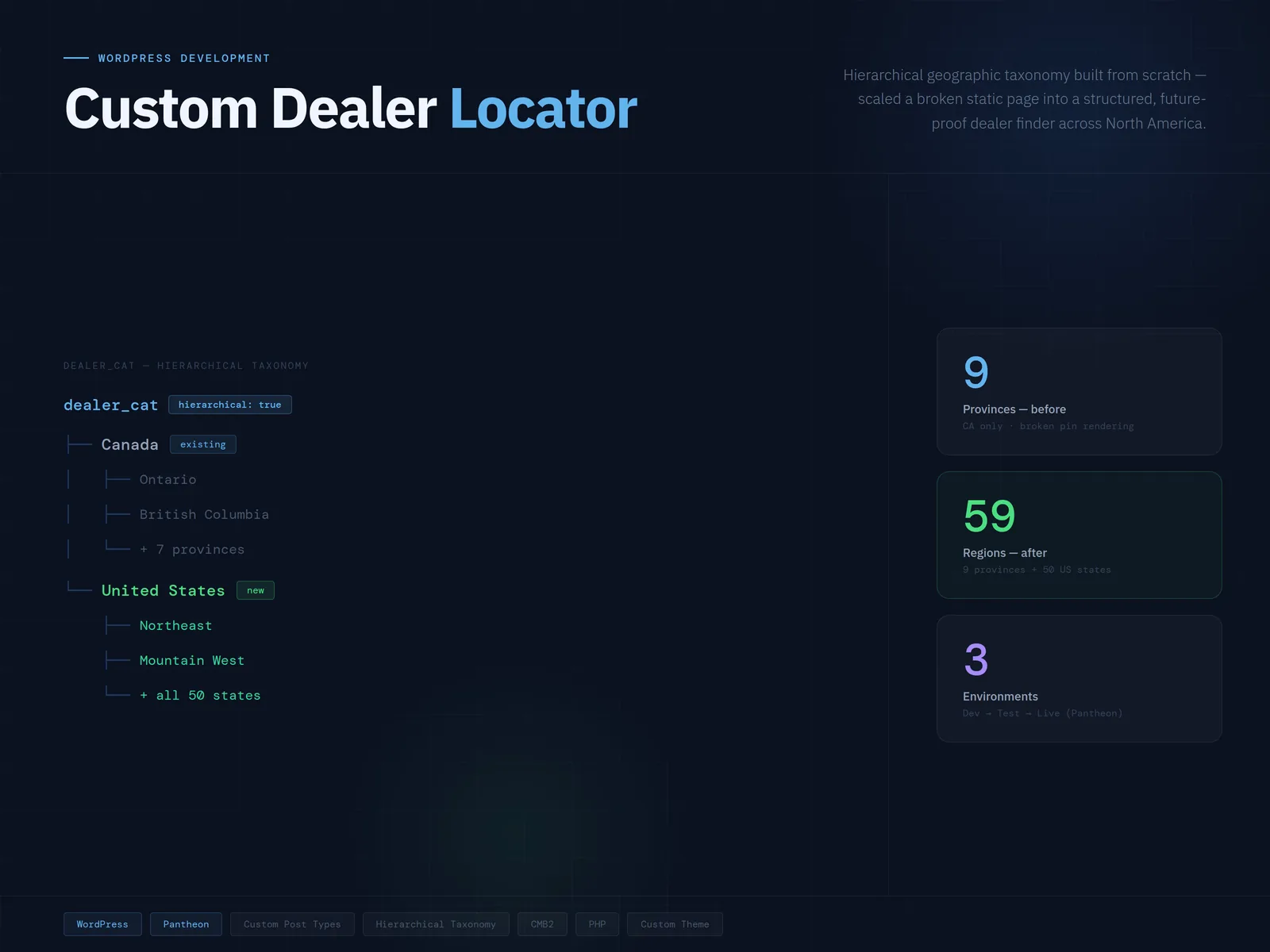
One public WordPress build had to grow from 9 regions to 50+ without a SaaS map plugin. I work behind design, creative, and marketing agencies when a sold project needs senior development to reach launch.
Technical SEO is a release check here, not a second service menu. The deliverable is a working build, tested before your agency puts its name on it.
The design does not show the content model, redirect map, form behavior, edge cases, or who owns each integration. Those decisions still have to be made before launch.
A build your team cannot maintain is not finished. I take the project from approved scope to a tested release, then hand back the access and moving parts in plain language.
Give me the part that needs code and a clear definition of done. I can own the full build or one contained technical layer inside your process.
Astro, WordPress, and static-first builds with responsive behavior, structured content, accessibility checks, and browser QA built into the scope.
Custom templates, theme edits, content migration, CMB2 fields, plugin triage, and practical CMS controls your agency can explain after handoff.
URL maps, redirects, metadata, schema, content, analytics, and form behavior get a migration plan before the new site replaces the old one.
Locators, calculators, lead tools, reporting interfaces, data transforms, integrations, and small web apps built around the actual workflow.
I trace what is finished, what only looks finished, and what is blocking launch. Then I scope the smallest honest repair that gets the project moving again.
Responsive checks, form tests, analytics verification, redirects, metadata, schema, performance checks, access notes, and a handoff that names the moving parts.
Your team should never discover the real build at final QA. Checkpoints keep design, functionality, content, and launch decisions visible as the site takes shape.
Send the brief, designs, stack, required functionality, and ship date. I flag missing decisions and technical risk before they eat the margin.
Your team sees the shell, templates, functionality, and content states before they harden into rework. Questions stay tied to the part being built.
I run the agreed launch checks, document what your team owns next, and stay available for the defined post-launch window.
Build quality shows up after handoff. The pages still work, the data has somewhere sensible to live, and the next developer can find the important parts.
If the cleanest answer is not a custom build, I will tell you. The point is not to make everything complex. The point is to ship the right thing cleanly.
The dealer locator case study shows the build decisions, stack, and handoff result in one contained project.
If the client needs a search diagnosis rather than a website, start with white-label technical SEO.


I put these acceptance criteria in the scope before launch.
A new build should not be priced like an emergency rescue. I quote the known work first and name the decisions that could move the number.
Best for a defined website, rebuild, landing page set, or custom feature with clear acceptance criteria.
My public benchmark is $200/hour for a defined block of rescue, integration, QA, or implementation work.
Is the build already sideways? Send what exists, what was promised, and the ship date.
Send the Brief →Include the designs or current URL, the stack, the required functionality, and what is still undecided. I will tell you what I can own and what needs clarification before I quote it.